


- Home
- >
News

This article outlines how China’s conveyor belt industry has become a global leader via manufacturing upgrading, cost-effectiveness, and quality. It highlights the strong export position, rising global share, and focus on technological and green innovation. Taking Liaoning Hengyi Rubber Machine Belt Manufacturing as an example, it introduces its certifications, global exports, and customized high-performance, eco-friendly products. It also covers internationalization trends, challenges from high-end demand and competition, and opportunities from the Belt and Road Initiative. The industry will keep innovating to strengthen its global position.
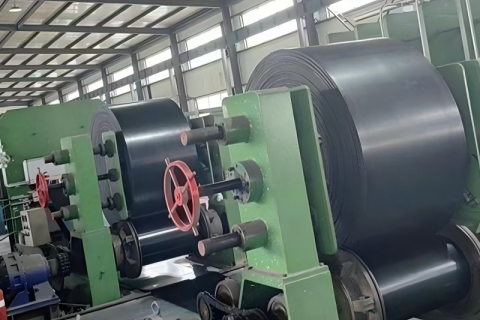
This article discusses how heat resistant conveyor belting cuts maintenance costs in high-temperature mining. High temperatures cause rubber aging, interlayer delamination, and shortened splice life, leading to frequent belt failures, shutdowns, and rising maintenance costs. Multi-ply heat resistant belting, with its even tension distribution and heat-resistant cover, slows thermal aging, reduces deformation and delamination, and extends service life. Proper selection (matching temperature, tension, and conditions) and customization are key, as they lower unexpected shutdowns and total operational costs despite a possibly higher initial investment.
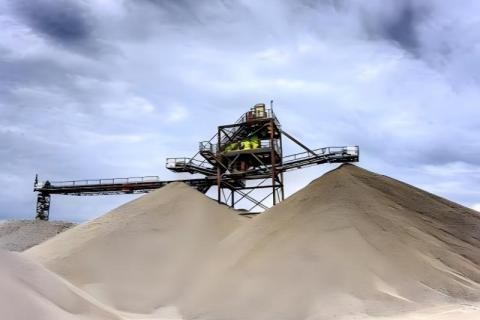
Heat Resistant Conveyor Belts enable safe, efficient material handling across heavy industries, including mining, steel, cement, power, and ports, with high durability, wear resistance, and stable performance.
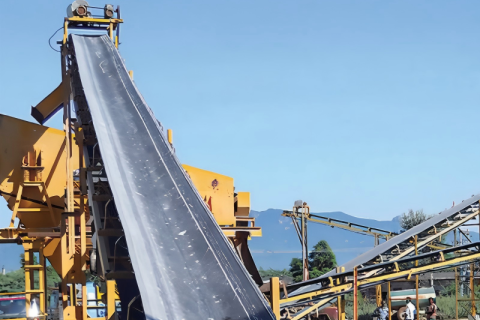
Heat resistant conveyor belts are essential in industries such as cement, steel, metallurgy, and coking, where materials like clinker, sintered ore, and hot coke often reach 300–800℃. Ordinary belts quickly age, crack, or fail under these conditions, leading to production downtime, material spillage, and safety risks. Heat resistant belts are specifically engineered to withstand high temperatures, ensuring continuous operation, reducing maintenance costs, and improving workplace safety. High-temperature environments pose several challenges, including rapid rubber aging, carcass deformation, and potential fire hazards. Professional heat resistant belts mitigate these risks through specialized materials and structures. Hengyi’s belts cover the full range of heat resistance grades (T1–T4), using materials such as SBR and EPDM, with maximum operating temperatures from 150℃ up to 400℃ for short-term use. The belts feature multi-layered cores, strong adhesion, and resistance to heat, chemicals, and wear, offering a service life 2–4 times longer than standard belts. These belts are widely used in cement clinker transport, steel and metallurgy processes, coking operations, and other high-temperature material handling applications. Hengyi provides customized solutions and has supplied products to large enterprises domestically and internationally, helping customers achieve safer and more efficient production.
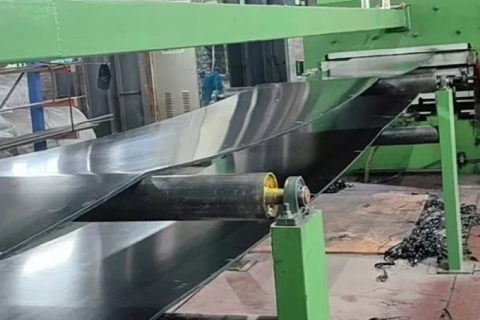
Fire resistant rubber conveyor belts are conveyor belts made of multi-layer polyester-cotton cloth or polyester canvas covered with heat-resistant glue and bonded together by high temperature vulcanization. They are suitable for conveying hot coke, cement, slag and hot castings below 175℃. The covering rubber of fire resistant rubber conveyor belts will produce a microporous carbonized layer when encountering high temperature, which is fireproof and resistant to combustion, which can prevent further heat transfer to the belt body and reduce the internal strength of the belt. The carbonized layer will produce irregular small cracks during the operation of the belt body, which is used to cool the belt body. The unique formula design of fire resistant rubber conveyor belts solves the key problems of high saturation, poor adhesion, and low adhesion between layers of ethylene-propylene rubber. It has the characteristics of light belt body, long life, and good heat resistance.
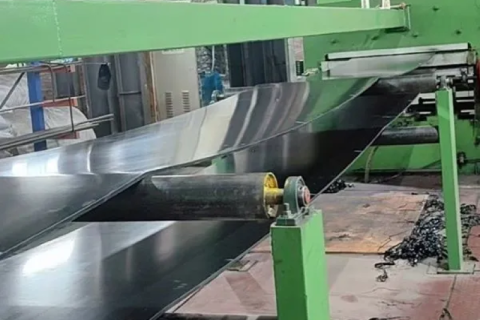
Heat resistant conveyor belt is a special kind of conveyor belt used in high temperature environments. It is usually made of multi-layer rubber-cotton canvas or polyester canvas covered with high-temperature or heat-resistant rubber and bonded together by high-temperature vulcanization. The main structure of heat resistant conveyor belt is composed of a high temperature resistant burning layer, a transition layer, an organic heat insulation layer, a strong layer and a heat-resistant layer. It is generally used in steel, cement, chemical and other industries. It can be used under the condition that the material temperature does not exceed 800℃ and the surface temperature does not exceed 220℃.
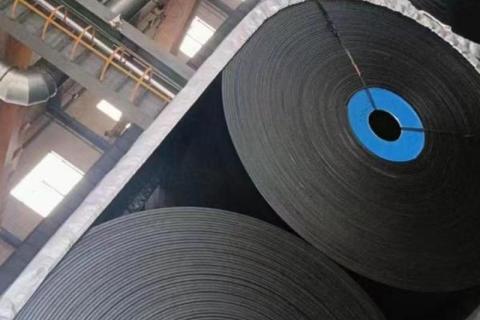
Multi ply belts are a kind of transportation tool used to transport various materials. Traditional conveyor belts cannot cope with high temperature environments. Our heat resistant conveyor belts are unique in design and material, and can adapt to high temperature working environments.
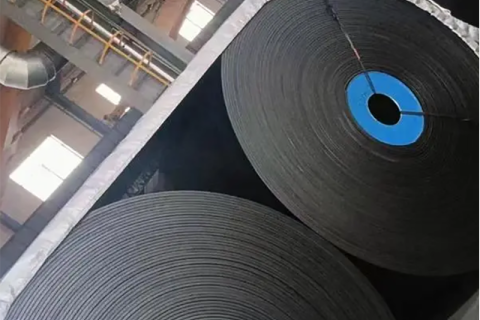
Conveyor belts are widely used in industry, and they play an important role in industries that need to transport high-temperature materials. The heat resistant conveyor belt is made of multiple layers of rubber cotton canvas (polyester cotton) or polyester canvas, covered with high-temperature or heat-resistant rubber, and bonded together by high-temperature vulcanization. heat resistant conveyor belt are suitable for conveying such as hot coke, cement, slag and hot castings below 175°C, and are mainly used in metallurgy and construction industries. The unique design of this solves the problems of ethylene propylene rubber due to high saturation, poor adhesion and low interlayer adhesion.
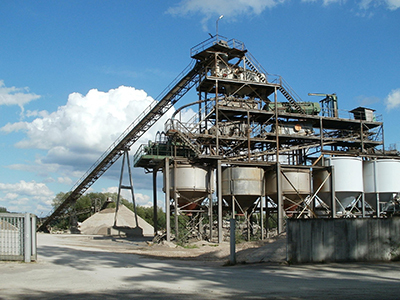
As an indispensable part of the industrial field, nylon conveyor belt can greatly improve work efficiency. By using electric pulleys and conveyor belts to move materials in industrial work, it is generally used for relatively heavy or large items.
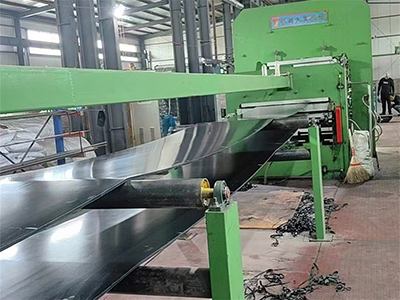
1.Rubber conveyor belt: Rubber conveyor belt is one of the most commonly used heat resistant conveyor belt. It is made of rubber material, has good high temperature resistance and tensile resistance, and can adapt to higher temperatures and pressures.
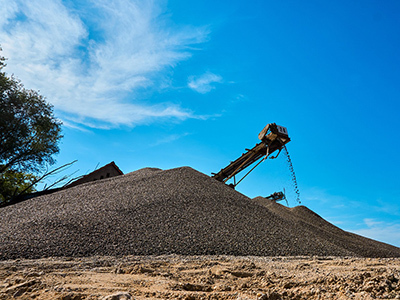
Heat resistant conveyor belt is mainly made of ethylene propylene rubber, which can withstand 600℃ high temperature for a short time or 200-300℃ high temperature for a long time. It is mainly composed of multiple layers of canvas covered with high temperature or heat resistant rubber, which are bonded together by high temperature vulcanization. It is generally used to transport hot coke, cement, slag, hot castings, etc.