


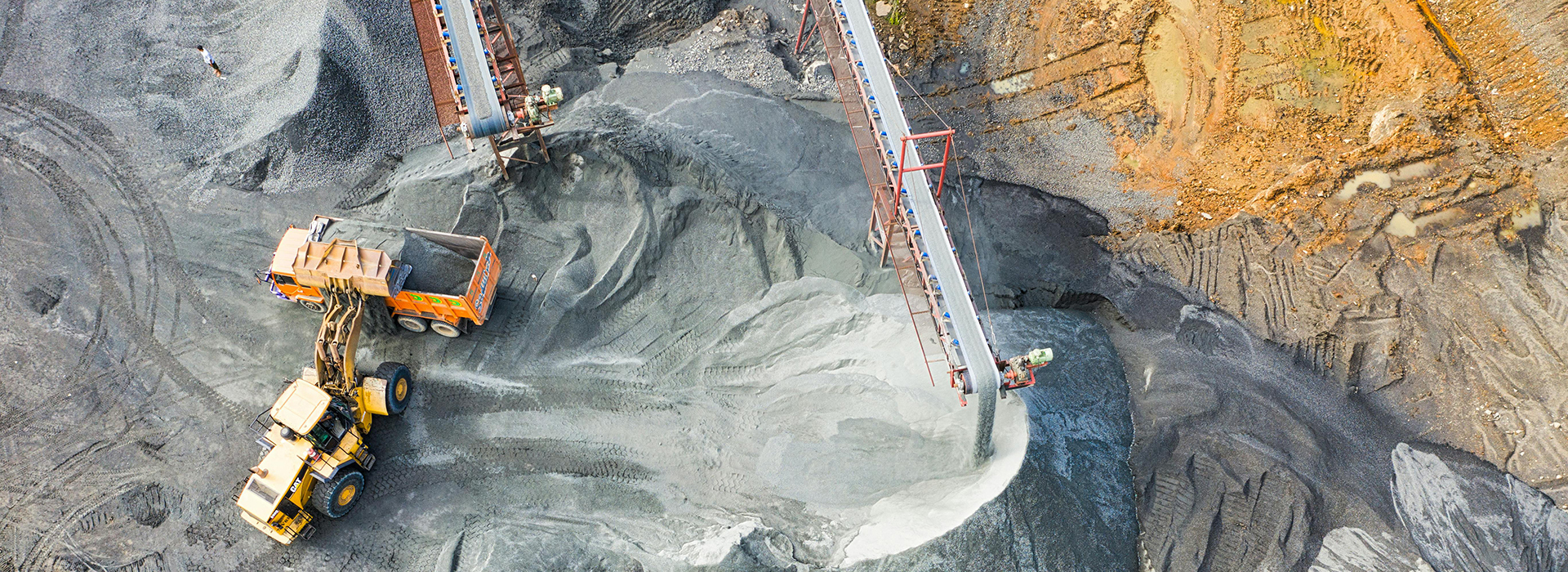
Which Industries Are Heavy-Duty Conveyor Belts Used In?
2026-01-27 10:56In modern industrial logistics systems, heat-resistant conveyor belts play a key role in enabling continuous, large-scale material handling. Whether it’s long-distance coal transportation across several kilometers or high-temperature material transfer inside steel plants, the operating stability and structural strength of conveyor belts have a direct impact on production efficiency and workplace safety.
So, which industries rely most on heavy-duty conveyor belts? And why can these belts maintain reliable performance under high loads and long operating hours? Let’s take a closer look below.
Main Industries Using Heavy-Duty Conveyor Belts.
According to industry data, heavy-duty conveyor belts are mainly used in heavy industries where durability and reliability are critical.
Coal Mining Industry:
The coal industry is one of the largest users of heavy-duty conveyor belts. In underground mining operations and coal preparation plants, conveyor belts are required to transport heavy materials continuously over long periods.
Our rubber conveyor belts offer strong tear resistance and impact resistance, making them suitable for high-capacity coal transport while keeping maintenance requirements low.
Steel & Metallurgical Industry:
In steel plants, materials such as iron ore fines, coke, and sinter are often transported at elevated temperatures. In these processes, a Heat Resistant Conveyor Belt is essential.
Designed specifically for high-temperature applications, the belt’s rubber cover resists thermal damage and abrasion, ensuring stable operation throughout ironmaking and steelmaking processes.
Cement Production Industry:
Cement production involves highly abrasive materials such as clinker and limestone. Heavy-duty conveyor belts with enhanced wear resistance can maintain a long service life even in high-abrasion environments, helping reduce downtime and replacement costs for cement plants.
Thermal Power Generation:
In coal-fired power plants, conveyor belts are responsible for delivering coal accurately and consistently to boiler systems. This requires conveyor belts that can operate stably over long periods without performance degradation, ensuring uninterrupted power generation.
Port Logistics & Bulk Material Handling:
Ports are major hubs for bulk material transfer. High humidity and salt exposure in coastal environments place higher demands on corrosion resistance and belt stability. Heavy-duty conveyor belts are widely used in bulk cargo terminals for loading and unloading operations under these conditions.
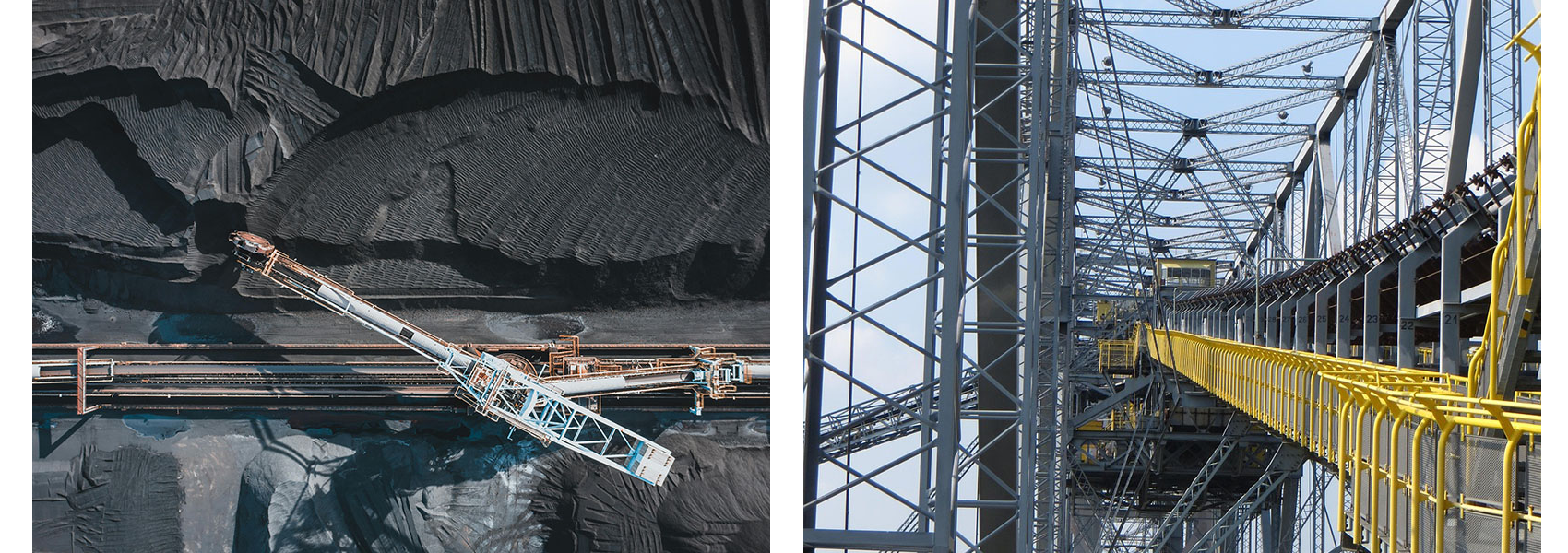
Key Technical Advantages of Heavy-Duty Conveyor Belts.
To understand why heavy-duty conveyor belts — especially Heat Resistant Conveyor Belt solutions — perform reliably in demanding applications, it’s important to look at their core design features.
High-Quality Materials and Structural Design:
Our heavy-duty conveyor belts use multiple layers of high-strength nylon fabric (NN canvas) as the belt carcass. Through precise calendaring, forming, and vulcanization processes, this structure delivers excellent tensile strength and impact resistance, allowing the belt to withstand heavy material drops without damage.
Stable Performance Across Different Operating Conditions:
· High temperature and humidity resistance: By combining durable rubber compounds with engineered drive systems, the belt can operate continuously in both high-temperature industrial plants and humid environments.
· Corrosion resistance: Key components are treated with protective coatings that help resist acids, alkalis, and salt exposure, significantly extending service life in chemically challenging conditions.
Smooth Operation and Low Noise:
Thanks to its integrated, splice-free design, the conveyor belt minimizes material deviation and vibration during operation. When paired with a precision drive system, this design ensures smooth movement while reducing noise and mechanical stress on the system.
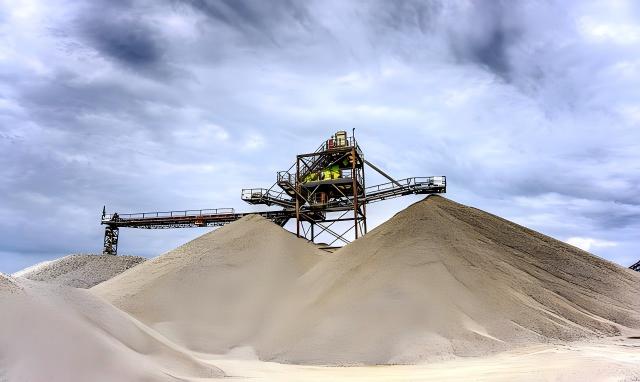
Technical Specifications Overview:
To help you better understand product performance, here is a summary of key technical parameters:
| Feature | Specification | Key Benefit |
| Belt carcass | Multi-layer high-strength NN fabric | High tensile strength, flexibility, impact resistance |
| Cover rubber | Premium wear-resistant rubber | Protects the carcass and improves durability |
| Drive system | Chain drive/precision drive | Stable operation in various environments |
| Structure | Integrated, splice-free design | Reduced vibration and material loss |
| Resistance | Acid, alkali, salt, high temperature & humidity | Suitable for corrosive and special conditions |
| Main function | Heavy material conveying | High load capacity, stable, and reliable |
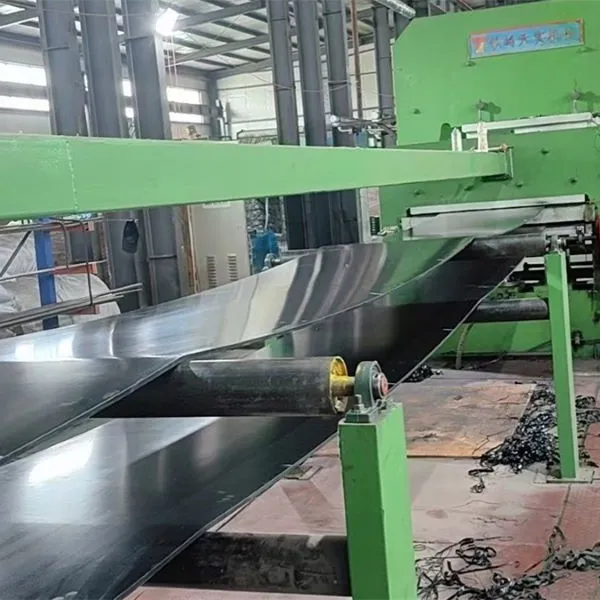
Selection Recommendations:
Based on the analysis above, here are some practical selection tips:
· For long-distance and heavy-load applications: Choose conveyor belts with multi-layer high-strength fabric carcasses.
· For precision production lines: If vibration and noise control are critical, an integrated, splice-free belt design is essential.
· For corrosive or high-temperature environments: Make sure the rubber cover is designed for abrasion and chemical resistance, especially when a Heat Resistant Conveyor Belt is required.
If you’re unsure which specifications best suit your application — such as temperature rating or abrasion grade — feel free to contact our engineering team. We’ll recommend a customized conveyor belt solution based on your material characteristics, operating speed, and environmental conditions.