

What Working Conditions Suit Different Cleat Heights of a Herringbone Conveyor Belt?
2026-02-28 19:19In inclined conveying systems, material rollback, sliding, and unstable loading are common issues that affect both efficiency and safety. When slippage occurs, many operators initially question belt quality. In real-world projects, however, the problem is often not the belt itself — it is an incorrect cleat height selection.
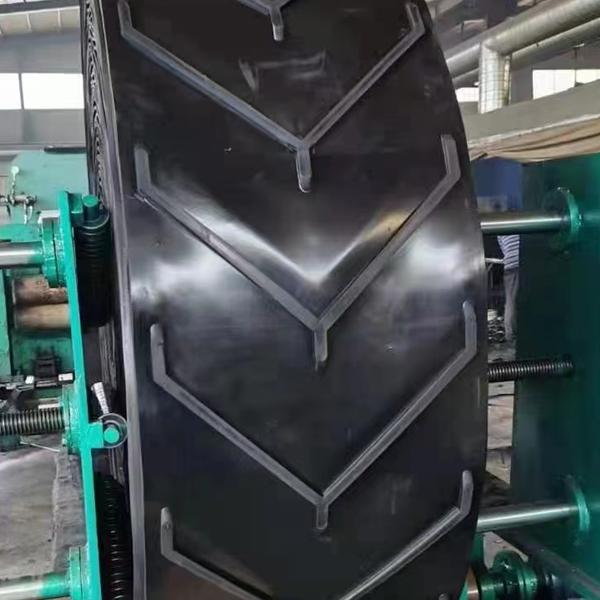
The herringbone pattern belt is widely used in inclined conveying because its V-shaped cleats improve grip between the belt surface and the material. But cleat height is not a case of “the higher, the better.” It must match the actual working conditions.
Structure and Working Principle of a Herringbone Conveyor Belt.
A herringbone conveyor belt is manufactured by vulcanizing V-shaped cleats onto the surface of a standard flat conveyor belt. These cleats increase friction and create a physical barrier that prevents material from sliding backward on slopes.
Changes in cleat height directly affect performance:
Higher cleats provide stronger material holding capacity.
Lower cleats reduce running resistance.
Cleat height determines the suitable incline range.
Cleat design influences cleaning difficulty and power consumption.
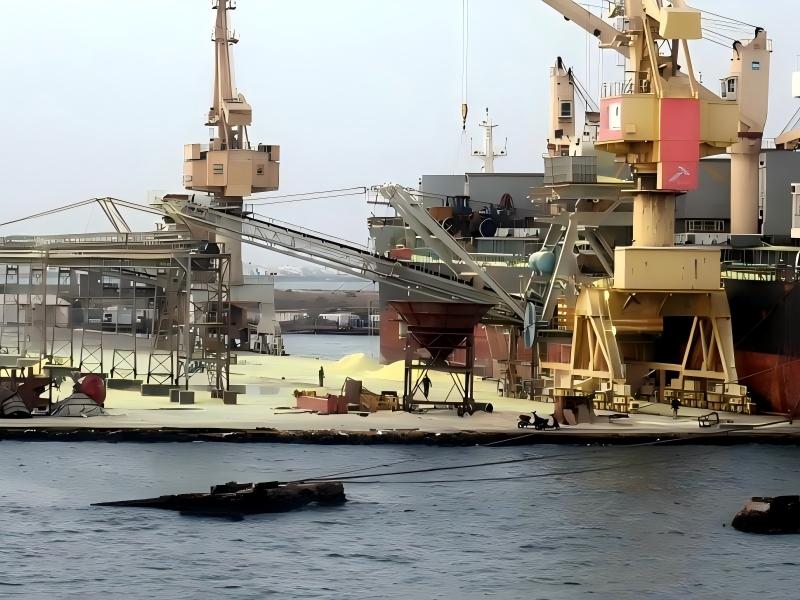
For industries such as mining, aggregate production, power generation, ports, and cement plants, incline angle and material characteristics vary significantly. As a result, cleat height must be selected accordingly.
Typical Working Conditions for Different Cleat Heights.
To better understand how cleat height affects application, we can divide it into three common ranges.
1. 5mm–8mm Cleat Height.
This is considered a low-profile design and is suitable for light incline conveying.
Typical conditions:
Incline angle between 0° and 18°
Dry, small-sized bulk materials.
Long conveying distances.
Higher belt speeds.
Systems requiring smooth and stable operation.
Common applications:
Coal handling in power plants.
Raw material transport in building materials plants.
Bulk handling in port terminals.
Low cleats reduce energy consumption and make return-side cleaning easier. However, they are not recommended for wet materials or steeper angles, where material rollback may occur.
2. 10mm–15mm Cleat Height.
This is the most widely used range and offers a good balance between grip and operational efficiency.
Typical conditions:
Incline angle between 18° and 30°.
Medium-sized aggregates or ores.
Materials with moderate moisture content.
Systems exposed to some impact loading.
Common applications:
Open-pit mining
Aggregate production lines.
Cement clinker conveying.
For many mining and heavy-duty operations, a herringbone pattern belt in this height range provides reliable performance without excessive energy demand.
3. 15mm–25mm and Above.
High cleats are mainly used in steep incline or high-moisture conditions.
Typical conditions:
Incline angles up to 30°–40°.
Wet or sticky materials.
Large lump materials.
Situations requiring strong anti-slip performance.
Common applications:
Crushing and screening systems.
High-drop ore conveying.
Steep incline conveying in ports.
It is important to understand that higher cleats increase drive power requirements, belt tension demands, and cleaning system complexity. If the working condition does not require a steep incline, an oversized herringbone pattern belt may increase operating costs unnecessarily.
Cleat Height vs. Working Condition Comparison.
| Cleat Height | Recommended Incline | Suitable Material Type | Operating Characteristics | Typical Industries |
| 5–8 mm | 0°–18° | Dry, small particles | Smooth running, low resistance | Power plants, building materials, ports |
| 10–15 mm | 18°–30° | Medium-sized ore, aggregates | Balanced grip and stability | Mining, aggregates, cement |
| 15–25 mm | 30°–40° | Strong anti-slip, higher power demand | Strong anti-slip, higher power demand | Crushing systems, heavy-duty conveying |
This table provides general guidance only. Final selection should always consider real operating data.
Key Factors That Determine Cleat Height Selection.
In practical engineering design, the correct cleat height depends on several variables:
Conveyor incline angle.
Material size and shape.
Moisture content.
Belt speed.
Bulk density.
Impact load at loading points.
For example, two systems operating at the same 25° incline may require different solutions if one handles dry crushed ore and the other handles wet, sticky material. That is why proper assessment is critical before selecting a herringbone pattern belt.
Why Customization Matters.
Choosing the right cleat height is not just about preventing slippage — it is about balancing grip, energy consumption, belt life, and system stability.
As a manufacturer supporting custom production, we match cleat height and belt construction based on real project data such as incline angle, material properties, belt width, and system layout. This approach ensures that each herringbone pattern belt delivers reliable anti-slip performance while maintaining long service life and stable operation.