

The Future of Material Handling: Low Rolling Resistance (LRR) Belts in 2026
2026-01-09 13:32The Future of Material Handling: How Low Rolling Resistance (LRR) Belts Cut Energy Costs in 2026
Overland conveyors are major energy consumers. LRR technology changes that.
Sustainability is no longer just a corporate buzzword—it is a financial and regulatory requirement. With global energy prices fluctuating and regulations like the EU Carbon Border Adjustment Mechanism (CBAM) coming into full effect, industrial plants are under immense pressure to cut power consumption and carbon footprint.
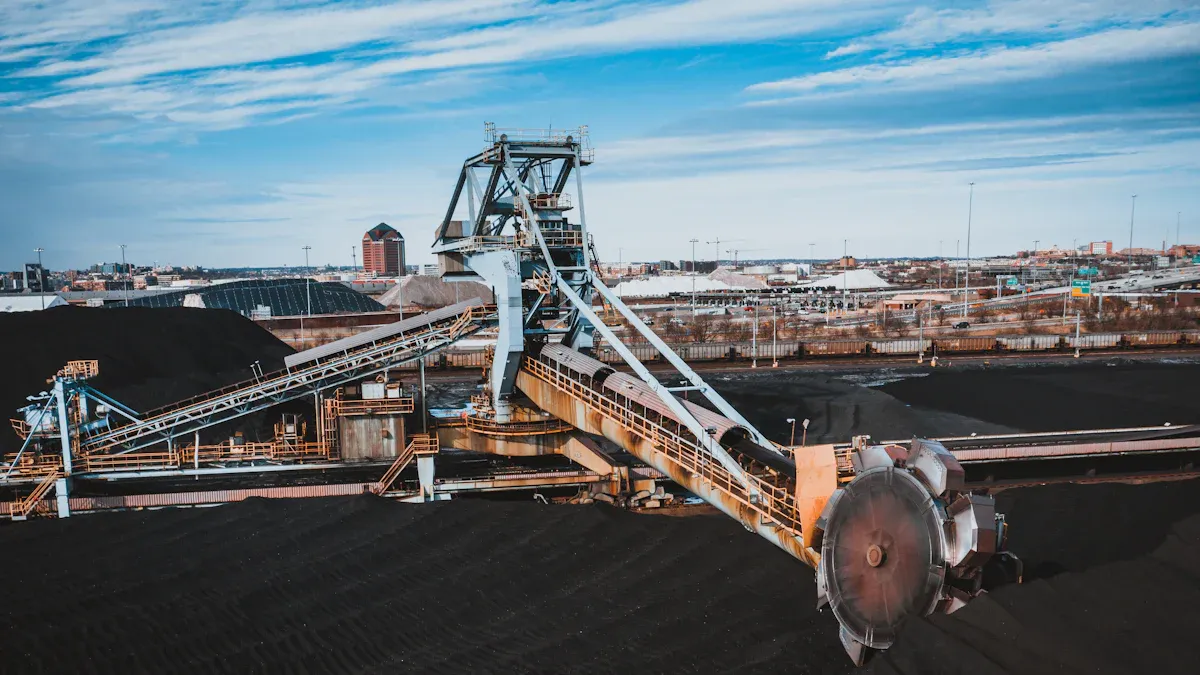
Did you know your conveyor belt is likely one of the biggest energy consumers in your facility? For long-distance overland conveyors, the belt itself accounts for the majority of the running resistance. Enter the Low Rolling Resistance (LRR) Conveyor Belt.
1. The Science: What is "Rolling Resistance"?
To understand LRR, we need to look at physics. When a conveyor belt runs over an idler (roller), the rubber on the bottom cover indents slightly due to the weight of the material.
-
The Energy Loss: As the belt moves off the roller, the rubber springs back. However, in standard rubber, this "spring back" is not instant. Some energy is lost as heat (hysteresis). This is called Indentation Rolling Resistance, and it accounts for nearly 60% of the energy required to drive a long horizontal conveyor.
-
The LRR Solution: At [Your Company Name], we use a specialized viscoelastic rubber compound for the bottom cover. This rubber is engineered to have lower hysteresis loss, meaning it bounces back faster and with less friction.
2. The ROI: Calculating the Savings
Switching to LRR belts isn't just about being "green"; it's about saving cold, hard cash. Let's look at a realistic scenario for a 5km overland conveyor.
💰 Potential Savings Calculation
-
System: 5km Overland Conveyor (Iron Ore)
-
Power Draw: 2,000 kW (Total)
-
Reduction with LRR: 15% (Conservative Estimate)
-
Electricity Cost: $0.10 / kWh
-
Annual Savings: $262,800 USD
-
5-Year Lifespan Savings: $1,314,000 USD
3. LRR vs. Standard Belts: The Durability Myth
A common myth is: "Energy saving belts are softer, so they must wear out faster." This is false.
Our LRR compounds are engineered to meet the same abrasion resistance standards (DIN-W or DIN-Y) as our standard mining belts. You do not have to sacrifice durability for efficiency. We test our belts according to DIN 22123 to verify both indentation resistance and abrasion loss.
4. Sustainability and Carbon Credits
Beyond the electricity bill, LRR belts help you meet Environmental, Social, and Governance (ESG) goals.
-
Scope 2 Emissions: Reducing electricity usage directly lowers your Scope 2 carbon emissions.
-
CBAM Compliance: For companies exporting to Europe, demonstrating a lower carbon footprint in your production process can reduce tax burdens.
Want a custom calculation?
See exactly how much energy (and money) you could save based on your conveyor length and tonnage.
Request a Custom Energy Saving Report