


Improving Conveying Efficiency: How Corrugated Sidewall Conveyor Belts Differ from Standard Belts
2026-01-14 20:45In industries like mining, ports, construction materials, and metallurgy, handling bulk materials with traditional flat or low-angle conveyor belts often leads to big headaches—things like taking up too much space, materials spilling or sliding back, and serious dust issues. All of that drags down efficiency, ramps up operating costs, and creates environmental problems.
Sound familiar? Are you dealing with limited space that makes long horizontal runs impossible? Dust flying everywhere when lifting powdery materials, causing huge losses? Particles rolling back down as soon as the angle gets a bit steeper? Or belts where the sidewalls tear or come loose, leading to constant downtime and repairs?
That's where corrugated sidewall conveyor beltscome in. With their smart design, they handle steep inclines—even vertical lifts—and solve these issues head-on, making transport faster, cleaner, and more cost-effective. Our Hengyi brand corrugated sidewall conveyor belts use high-quality polyester fabric as the core, with wavy sidewalls and cleats that connect seamlessly to create a fully enclosed path, putting an end to material leaks.
What Exactly Is a Corrugated Sidewall Conveyor Belt?
It has three main parts:
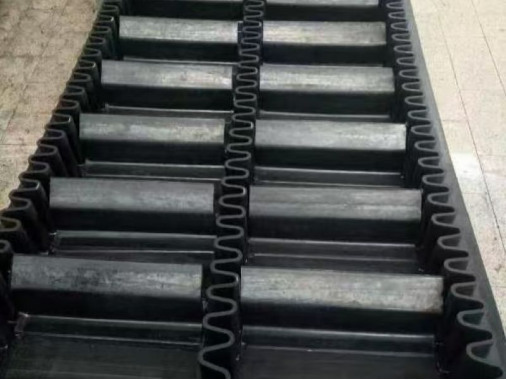
The base belt: This includes top and bottom rubber covers plus the core (usually cotton, nylon, polyester fabric, or steel cord).
Corrugated sidewalls: Flexible wavy vertical edges on both sides, typically 40-400mm high.
Cross cleats: Optional T, C, or TC shapes spaced along the belt for extra support.
Key Differences: Corrugated Sidewall vs. Regular Flat Conveyor Belts.
Regular flat belts work great for horizontal or gentle slopes, but corrugated sidewall conveyor belts are made for tough, steep jobs. Here's a straightforward comparison based on real-world performance:
| Parameter | Regular Flat Belt | Corrugated Sidewall Belt (Hengyi) | Efficiency Boost |
| Max Incline Angle | 0-20° (up to 30° with patterns) | 30°-90° | Enables vertical lifts, cuts path length by 50%+ |
| Spill/Leak Prevention | Relies on troughing, prone to spills | Fully enclosed pockets, virtually zero leaks | Reduces material loss 5-20%, keeps site clean |
| Space Requirements | Long horizontal runs needed | Steep or vertical setup | Saves 30-70% floor space, lowers build costs |
| Capacity (m³/h) | Moderate (belt width dependent) | 1-4000 (handles up to 300mm particles) | Boosts throughput 20-50% |
| Dust Control | Open design, lots of dust | Enclosed transport, minimal dust | Meets tough environmental regs, cuts cleanup |
Real-World Applications:
Corrugated sidewall conveyor belts are a go-to in many heavy industries:
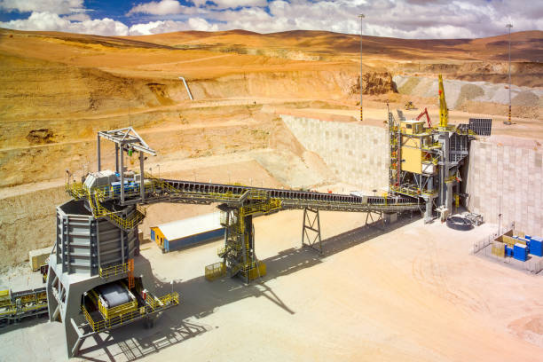
Mining: Perfect for hauling coal or ore up steep slopes, cutting out multiple transfer points for a simpler setup.
Ports and docks: Great for loading/unloading bulk cargo with vertical lifts, freeing up valuable dock space and speeding things up.
Construction and cement: Handles sand, gravel, or clinker at big angles without rollback, with flexible layouts.
Metallurgy and power plants: Ideal for enclosed transport of powders like ore fines or coal dust, keeping dust down and the site cleaner.
If you’re interested in sidewall conveyor belt products, feel free to contact us anytime for inquiries or orders!