



Free Guide: How to Adjust Conveyor Belt Misalignment
2026-02-04 09:28In mining sites, ports, power plants, and processing lines, conveyor belts run almost nonstop and play a critical role in daily production. Once a conveyor belt starts to track off center, it doesn’t just increase belt wear—it can also cause material spillage, blockages, equipment damage, and even safety risks.
In real operations, belt misalignment is one of the most common and frustrating problems, especially in the conveyor belt mining industry. Many operators immediately start adjusting idlers, but often see little improvement. The real issue is usually simple: the root cause of the misalignment hasn’t been identified.
This guide walks you through common operating conditions and shows how to correctly diagnose conveyor belt tracking problems—and fix them the right way.

First Things First: Why Does a Conveyor Belt Run Off Track?
Most conveyor belt misalignment problems come from one or more of the following causes:
Uneven belt tension on both sides.
Installation errors with pulleys or idlers.
Off-center or uneven material loading.
Material buildup on rollers or pulleys.
Belt edge wear or poorly aligned belt splices.
Understanding which factor is at play is the key to making effective adjustments.
Common and Effective Ways to Adjust Conveyor Belt Misalignment.
· Adjust the Belt Tension System:
If the belt runs to the same side under both no-load and full-load conditions, it usually means the tension on the two sides is uneven. In this case, adjust the tension screws to balance the force on both sides.
If the belt wanders left and right without a clear pattern, the overall tension is likely too low. Increasing total belt tension often solves the issue.
· Check and Correct Pulley Alignment:
When misalignment happens mainly at the drive pulley or return pulley, installation accuracy is usually the problem. Common issues include pulleys that are not level, pulley shafts that are not parallel to the conveyor centerline, or pulleys that are slightly skewed.
Carefully check pulley level and alignment, and correct the installation if needed. This step is especially important in heavy-duty systems used in the conveyor belt mining industry.
· Adjust Idler Frames or the Conveyor Structure:
If the belt consistently tracks to one side during no-load operation, adjusting the idler frames can help. Move the idler frame on the misaligned side slightly forward in the belt travel direction, or raise the opposite side slightly.
Small adjustments go a long way—typically 1–2 cm is enough.
· Remove Material Buildup on Rollers and Pulleys:
In wet or sticky material conditions, rollers and pulleys can easily accumulate material. This buildup increases the local diameter of the roller, changing belt speed and tension in that area, which leads to misalignment.
Regular cleaning is one of the simplest and most effective ways to prevent belt tracking problems.
· Correct Uneven Material Loading:
If the belt runs straight when empty but shifts to one side under load, uneven material distribution is usually the cause. Check whether the feed chute is centered, whether material is dropping to one side, and whether material spreads evenly across the belt width.
Optimizing the feed point or improving chute design can significantly reduce misalignment—something commonly overlooked in the conveyor belt mining industry.
· Inspect the Belt and Splices:
Severely worn belt edges or poorly aligned splices can create uneven tension across the belt width. This often leads to continuous tracking problems.
In these cases, the belt edges should be repaired, the splice remade, or the belt replaced if necessary.
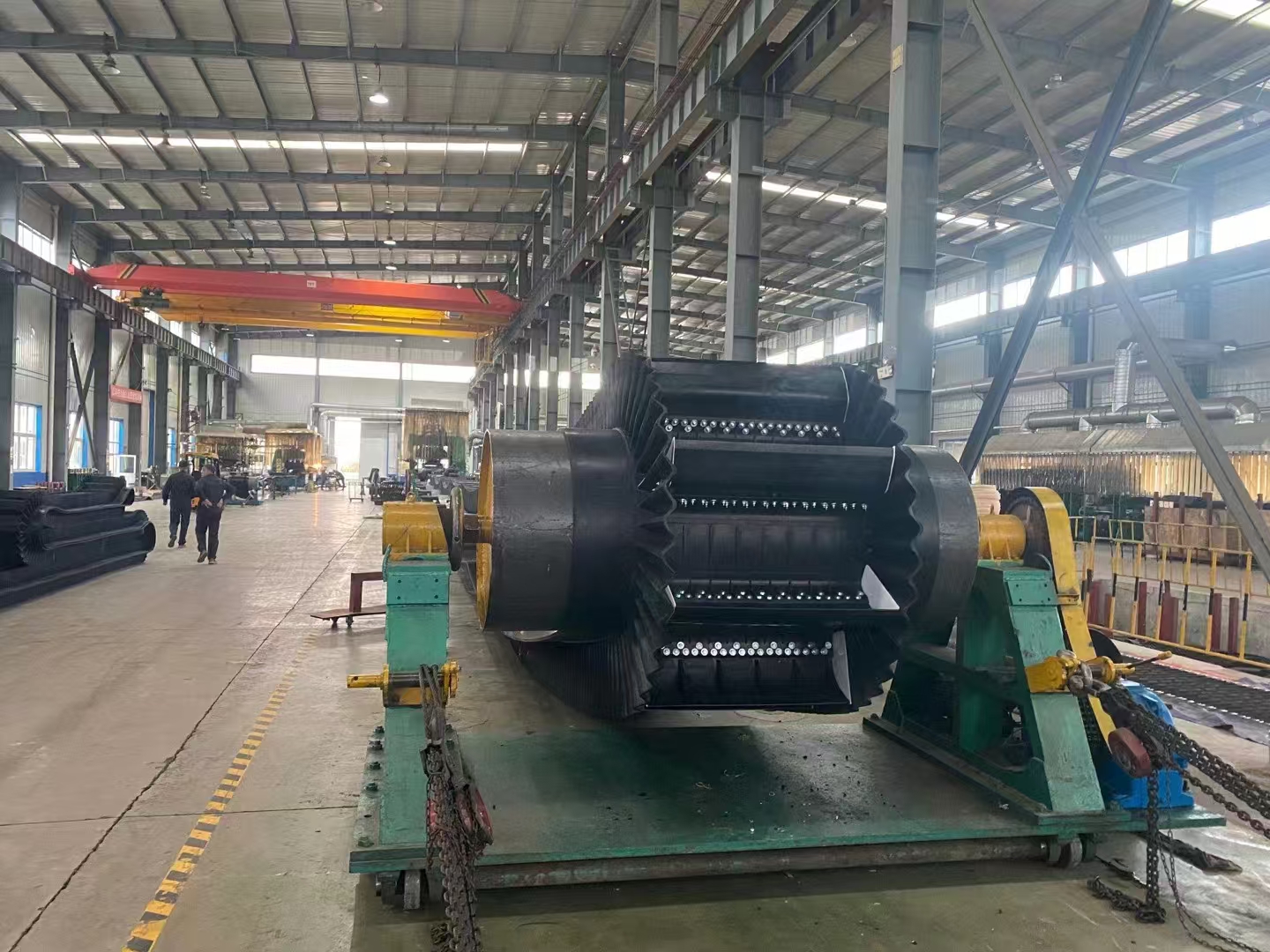
Quick Overview: Conveyor Belt Splices.
On-site, conveyor belts must be joined into a loop using splices. Common splice types include hot vulcanized splices, cold-bonded splices, mechanical fasteners, and overlap joints.
Each method suits different working conditions, but one thing is universal: splice quality directly affects belt tracking, stability, and service life.
Conveyor belt misalignment isn’t the real problem—blind adjustments and repeated trial-and-error are. By observing how the belt behaves and systematically checking tension, pulleys, idlers, material flow, and belt condition, most tracking issues can be solved directly on site.
We hope this free guide helps you deal with conveyor belt misalignment more confidently and keep your system running safely, efficiently, and reliably.